Materials influence more than a color palette. They change texture, maintenance, and how an object looks after time in a pocket. Choose a surface you will enjoy living with, not just one that looks good when new.
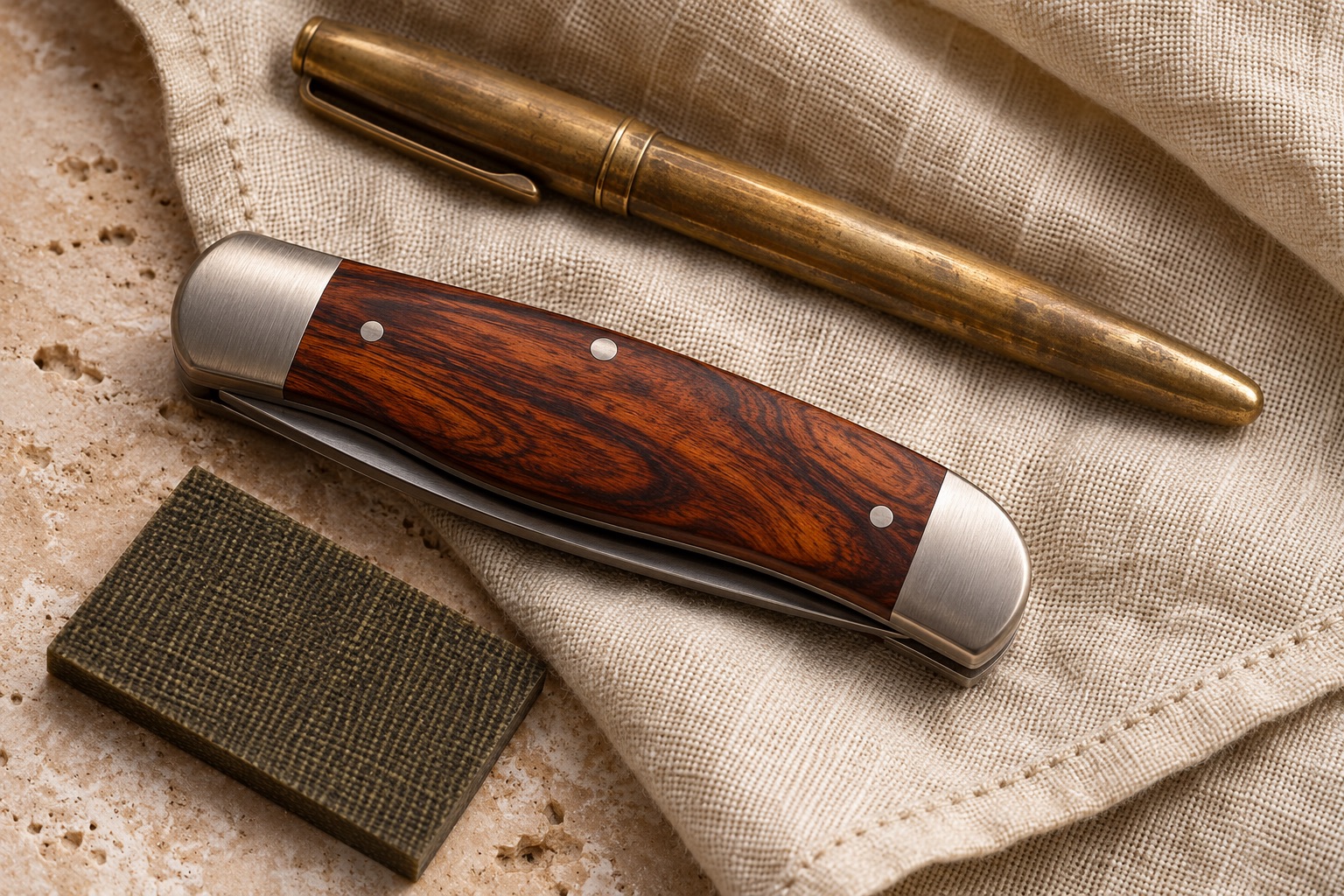
Wood: variation is part of it
Grain makes each piece different. Wood can bring warmth to a small metal object, whether used as scales or an inlay. Follow the maker’s care guidance; finish, construction, and wood species affect how it should be treated. Do not assume every wood handle tolerates the same conditions.
Micarta and G10: look at the finish
Both appear across contemporary knife designs, but the surface treatment matters as much as the material name. A smooth finish and an aggressively textured one can feel quite different. Micarta may change in appearance with handling. Judge the actual description and finish rather than treating a material label as a comfort guarantee.
Titanium: a restrained foundation
Titanium appears as handles, bolsters, clips, and pen bodies. Brushing, blasting, machining, and anodizing produce very different effects. It can provide a quiet backdrop for a contrasting material or carry the entire design by itself. Scratches and wear remain possible.
Copper and brass: accepting change
These metals can develop patina rather than retaining their initial appearance. Some owners enjoy that change; others prefer a more consistent finish. Cleaning and polishing should follow the maker’s instructions, particularly when coatings or contrasting materials are involved.
Choose contrast carefully
A warm handle beside a cooler metal bolster can be enough. A pen and knife need not be a matching set. Shared restraint, compatible textures, and sensible proportions can connect objects more naturally than identical colors.