The appeal of a slipjoint is often visible before the blade opens: a continuous handle, a shield or bolster, a restrained shape. Modern interpretations keep that familiar language while changing the steel, construction, and finish.
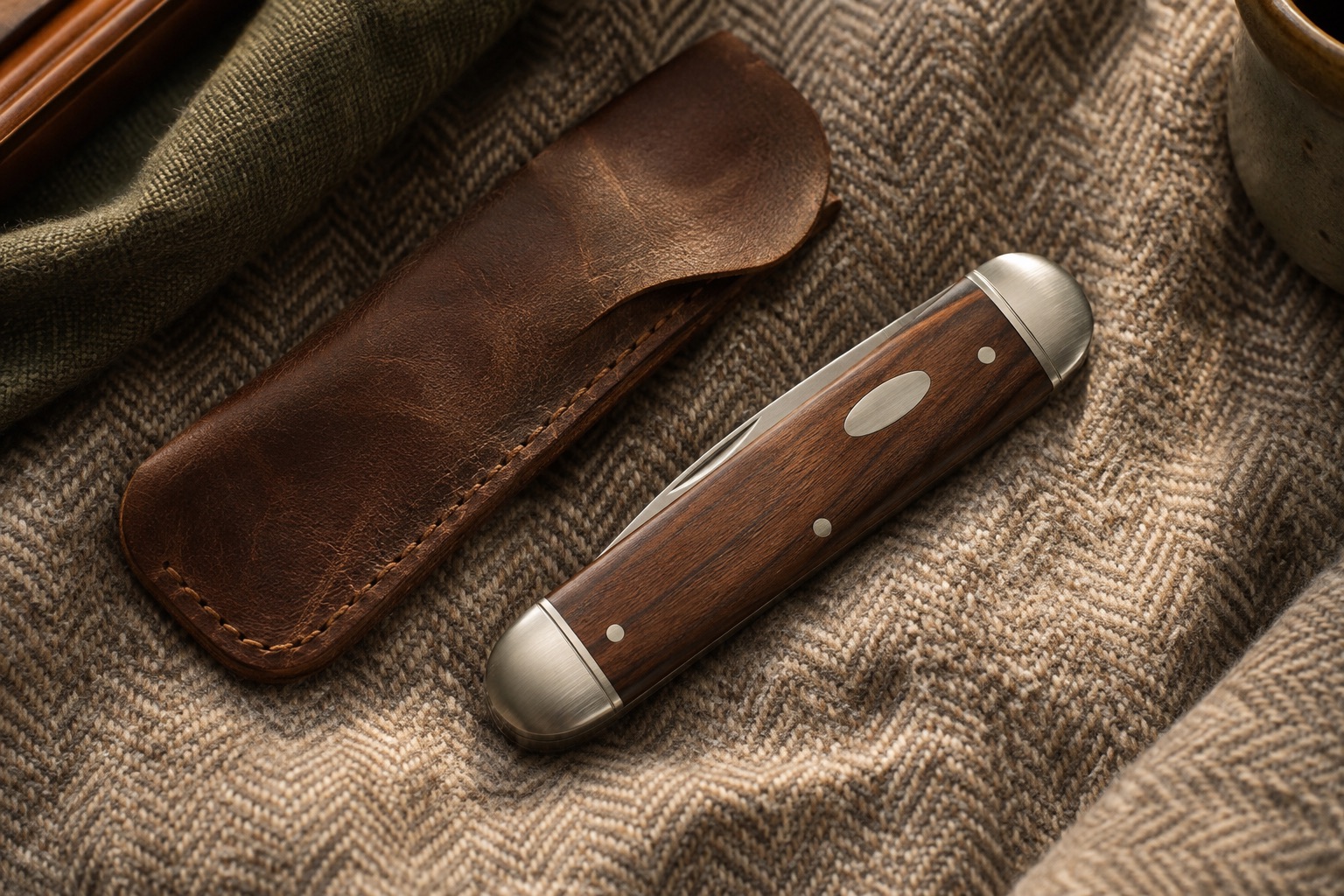
What makes it a slipjoint
A slipjoint uses spring resistance to hold the blade in position rather than a positive blade lock. Resistance is not the same as a lock. Keep fingers clear of the blade’s closing path and use controlled cutting motions appropriate to the knife. A half-stop, when a particular model has one, is not a substitute for careful handling.
Traditional does not mean old-fashioned
Wood and bone give familiar patterns their warmth. Micarta, G10, and titanium bring different textures and visual character to the same general vocabulary. Makers such as ESNYX explore this relationship between traditional outlines and contemporary production. The mechanism still needs to be checked for the particular version.
Opening is part of the choice
A nail nick, an opening hole, and other arrangements place different demands on the user. Look at the specified opening method rather than assuming all slipjoints operate alike. Spring strength and the effort required to open a knife are difficult to judge from specifications alone.
A deliberate kind of carry
A slipjoint can make sense for someone who appreciates a simple, familiar tool and does not need a locking mechanism for their intended tasks. It should be chosen with an understanding of its limits, not because its appearance makes it universally acceptable. Local rules and venue policies still apply.