A knife can look traditional and operate like a modern folder. That combination is part of the attraction of designs from makers such as Peña and ESNYX: familiar forms interpreted through contemporary mechanisms and materials.
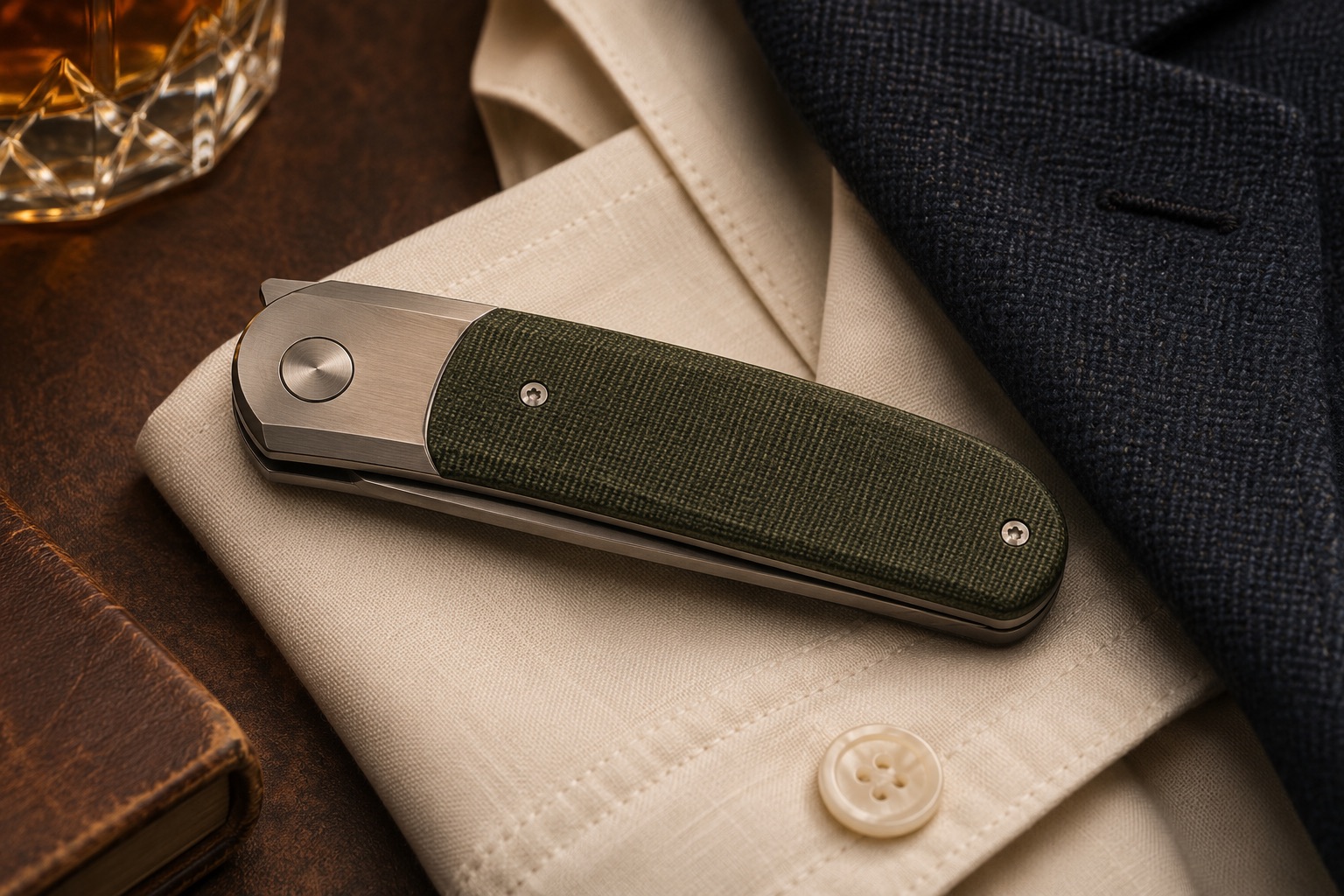
Separate appearance from operation
A bolster or shield tells you something about a knife’s design language, not whether its blade locks. Closely related knives can use different opening methods and locks. Read the exact version’s description rather than carrying an assumption from one model to another.
The front flipper
A front flipper uses a portion of the blade’s tang exposed near the front of the handle as an opening surface. Its shape can avoid the conventional rear flipper tab, but that does not establish how easy a particular knife will be for your hands. Technique, geometry, and the individual mechanism all matter.
What a clip changes
A visible clip interrupts the quiet appearance of a traditional-looking knife in tailored clothing. Our preference is to keep the whole knife inside the pocket. A clip does not necessarily need to come off, but its shape and the intended carry arrangement must suit that use. Do not assume a clip can be removed or that every folder is suitable for loose-pocket carry.
Choose the whole object
Look at the handle in relation to the blade, the contrast between bolsters and scales, and the restraint of the hardware. A small decorative detail can be enough. A distinctive material need not cover the entire knife to give it character.